
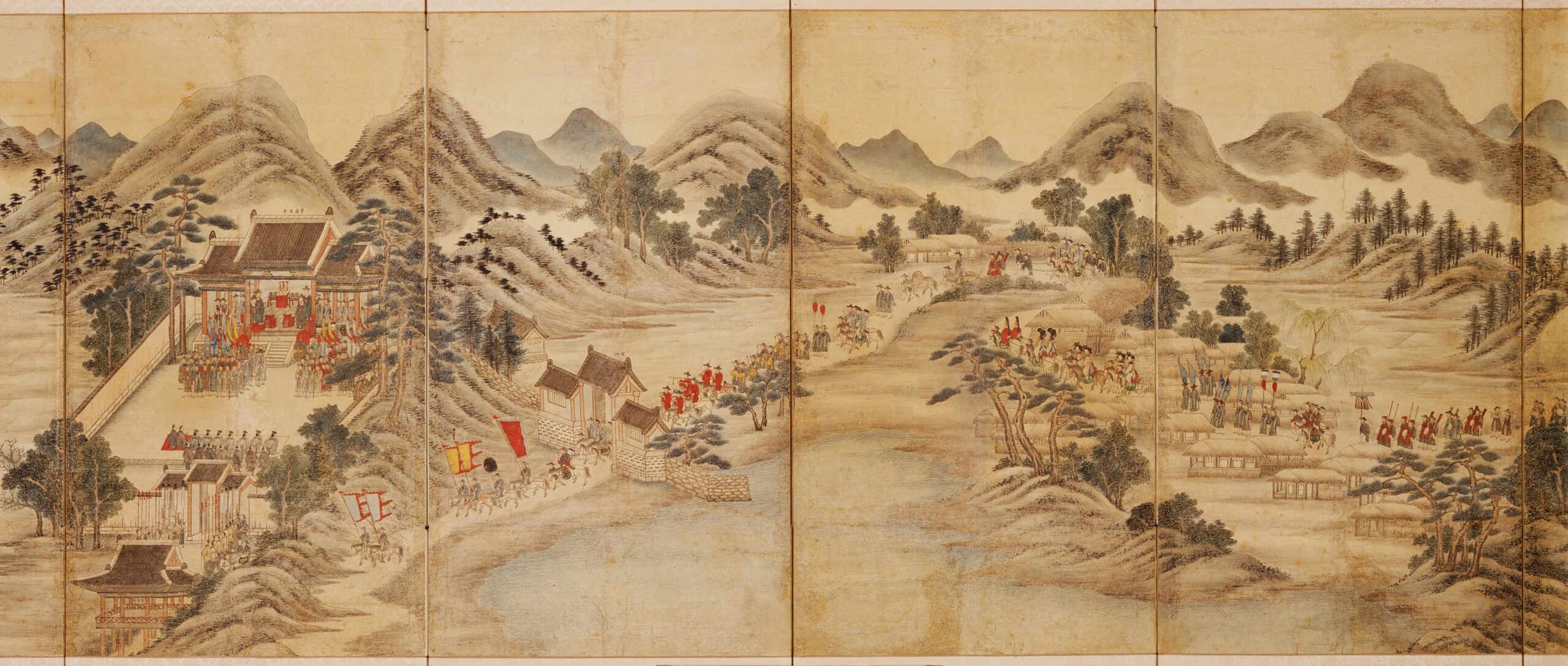
Keynote I
Wartime Survival and Postwar Dynamics of Power in Chosŏn Korea, 1592-1623
Nam-lin Hur
Professor, History of Japan and Religious Culture (University of British Columbia)
The Imjin War (1592–1598) brought the entire country to the brink of a survival crisis. It undermined royal authority, caused countless deaths across all social classes, and disrupted families and livelihoods on a massive scale. In the aftermath of the war, people from all walks of life sought to rebuild their lives by reflecting on the hardships they had endured and transforming their wartime experiences into pathways for recovery. Leading the efforts of postwar restoration were the country’s primary power holders—the king and the sajok (yangban) elite—whose actions and achievements significantly shaped the lives of the broader population.
In this presentation, Hur examines three key episodes that illustrate how shifting power dynamics took shape and helped establish a new tone for postwar governance—one that influenced the lives of all members of society, for better or worse. Drawing on the insights from these three episodes, Hur argues that the sajok men managed to establish a relatively favorable balance of power vis-à-vis the postwar monarchy, thereby securing greater privileges than before. Interestingly, in this process, women from yangban families became hostage to a broader trend in which elite households sought to streamline and tighten control over their expanding memberships. At the national level, the gains enjoyed by the ruling class came at the expense of the ruled, including the slave population, who were subjected to varying degrees of loss and disadvantage.
1592-1623 조선에서의 전쟁 생존과 전후 권력 관계
임진왜란(1592–1598)은 전국을 생존 위기의 벼랑 끝으로 몰아넣었다. 왕실 권위를 훼손하고 모든 계층에 걸쳐 무수한 사망자를 발생시켰으며, 대규모로 가계와 생계를 파괴했다. 전쟁의 여파 속에서 각계각층의 사람들은 겪은 고난을 되돌아보고 전쟁 경험을 회복의 길로 전환함으로써 삶을 재건하고자 했다. 전후 복구 노력을 주도한 것은 국가의 주요 권력층인 왕과 사족(양반) 엘리트였으며, 그들의 행동과 성과는 일반 대중의 삶을 크게 형성했다.
이 발표에서는 권력 역학의 변화가 어떻게 형성되어 전후 통치의 새로운 기조를 확립하는 데 기여했는지 보여주는 세 가지 주요 사건을 살펴본다. 이 기조는 좋든 나쁘든 사회 구성원 모두의 삶에 영향을 미쳤다. 이 세 사건에서 얻은 통찰을 바탕으로 저자는 사족 남성들이 전후 군주제에 대해 상대적으로 유리한 권력 균형을 구축함으로써 이전보다 더 큰 특권을 확보했다고 주장한다. 흥미롭게도 이 과정에서 양반 가문의 여성들은 확대되는 가문 구성원에 대한 통제를 효율화하고 강화하려는 엘리트 가문의 광범위한 흐름 속에서 인질과 같은 처지가 되었다. 국가 차원에서는 지배 계급이 누린 이익이 노비 계층을 포함한 피지배 계층의 희생 위에서 이루어졌으며, 이들은 다양한 정도의 손실과 불이익을 겪었다.
Biography
Nam-lin HUR’s research involves the Imjin War (1592–1598), Korea-China-Japan relations from the 15th to 19th centuries, and religion and society in Chosŏn Korea and Tokugawa Japan. He is currently working on two book manuscripts: one on the Imjin War, and the other on Buddhism and society in mid-Chosŏn.
Keynote 2
Repetition and Difference: The First and the Last Pieces of the Joseon Dynasty Travelogue to Beijing (燕行錄) and the History of Illusion records(幻史)
Junchul Lim 임주철 林濬哲
Professor, Department of Sinographic Literatures, Korea University
This presentation analyzes the characteristics of the Travelogue to Beijing (燕行錄), records authored by Joseon intellectuals, through the framework of “repetition and difference.” First, I examine the earliest extant Travelogue to Beijing, Jang Ja-chung’s Record of Ministerial Envoy to the Court (判書公朝天日記), and Kim Dong-ho’s Travelogue to Beijing (燕行錄), the last surviving account of a diplomatic mission to the Qing in 1894, to consider how repetition within the same diplomatic route generated difference in writing practices. I then turn to another case of difference within repetition: the notion of Hwansa (幻史), first used by Kim Kyŏng-sŏn in his Yeonwŏnjikchi (燕轅直指), which refers to records of illusion (magic) performances in the Travelogue to Beijing. Illusion was perceived on three levels: as practices associated with heterodox religions, as deceptive acts that beguiled the populace and disrupted society, and as staged spectacles. In early Joseon, such performances were prohibited and records remained concealed under prejudice, but from the eighteenth century onward, new modes of reflection and representation emerged, as seen in the interests of Hong Dae-yong, Park Ji-won, and Kim Jin-su. As these examples of repetition and difference suggest, the Travelogue to Beijing was not merely a record of diplomatic travel, but a site that revealed the humanistic reflections of Joseon intellectuals. Its value deepens further when placed in connection with external sources. Future research, therefore, must be expanded in a broad comparative cultural perspective.
본 발표는 조선시대 지식인들이 기록한 연행록(燕行錄)의 특성을 ‘반복과 차이’라는 틀로 분석한다. 먼저 조선 최초의 연행록인 장자충의 『 判書公朝天日記 』와 마지막 사행기록인 김동호의 『 燕行錄 』을 사례로 들어, 동일한 외교 경로 속에서 반복과 차이를 산출하는 글쓰기 양상을 고찰한다. 이어서 반복 속 차이의 사례로 김경선이『 燕轅直指 』에서 사용한 개념인 ‘환사(幻史)’, 즉 연행록에 나타난 마술(환술) 공연 기록의 변화 양상을 검토한다. 환술은 異端 종교와의 연관성, 사회적 기만 행위, 공연 예술이라는 세 층위로 이해될 수 있으며, 조선 전기에는 금지와 편견 속에 기록이 은폐되었으나 18 세기 이후 홍대용, 박지원, 김진수 등 지식인들의 관심을 통해 새로운 성찰과 기록 방식이 나타났다. 이러한 반복과 차이가 보여주듯, 연행록은 단순한 사행 일지가 아니라 조선 지식인들의 인문적 사유를 드러내는 장(場)이었으며, 그 가치는 외부 자료와의 접속 속에서 더욱 심화될 수 있다. 따라서 향후 연행록 연구는 비교문화적 시야에서 폭넓게 확장될 필요가 있다.
Biography
Junchul LIM 林濬哲 is a Professor in the Department of Sinographic Literatures at Korea University. His research focuses on Korean poetry in literary Sinitic, with particular attention to imagery and thematic concerns, and on the works of the Travelogue to Beijing (yŏnhaengnok 燕行錄) by Chosŏn envoys to Qing China. His current projects include designing a database of Korean poetry in literary Sinitic for AI research.
Panel 1: Collective Memories and Cultural Production in the Aftermath of the Imjin War
When the Dead Return: Haunting the Imjin War in Late Chosŏn
Solmi Chung 정솔미
Assistant Professor, Department of Sinographic Literatures, Korea University
This presentation examines how the memory of the Imjin War (1592–98) resurfaced in late Chosŏn Korea through ghost narratives, focusing on the case of Che Mal (諸沫). While ghosts in premodern Korea are often assumed to be predominantly female, from the seventeenth century onward male ghosts began to appear in large numbers. Unlike tragic female ghosts who embodied han and evoked sympathy, male ghosts were portrayed as authoritative figures who upheld Confucian ideals of loyalty and moral virtue.
Che Mal was a militia leader of humble origins who died early in the war and was soon forgotten. In the mid-eighteenth century, however, he returned in ghostly form. Local elites in Sŏngju revived his story to restore their community’s damaged reputation, and the state later incorporated him into official rituals of loyalist commemoration. Through this process, Che Mal’s ghost was transformed into a political symbol of loyalty and dynastic legitimacy.
의병장 제말(諸沫) 귀신 이야기와 그 전파에 대하여
1792년 정조(正祖)는 이순신(李舜臣), 임경업(林慶業)의 후손을 대보단(大報壇) 제사에 참여할 것을 명하는 동시에 제말(諸沫)이라는 어느 한미한 의병장을 이들과 비슷한 반열에 올려놓으며 성대하게 기념되도록 하였다. 제말은 임진왜란 초기 경상북도 성주목사(星州 牧使)를 지내다가 전사(戰死)한 의병장으로서 그 기록이 거의 남아있지 않았는데, 어떻게 죽은 지 200여년 후 이처럼 크게 기념될 수 있었을까? 그 시작은 기실 18세기 초 성주의 사족 정석유(鄭錫儒)가 제말에 대한 귀신 이야기를 창작하고 제말 귀신의시를 널리 유포하면서부터다.
본 발표문은 제말 귀신 이야기가 형성된 과정을 소개하고, 이 이야기가 당대의 정치적 정황, 특히 전쟁 기억을 재구성하고 조선의 대내외적 문제들을 타개하고자 하는 움직임과 조응하면서 변모되고 또 크게 호응되는 양상을 밝힐 것이다. 그리하여 조선후기에 유행한 ‘남성 귀신 이야기’가 모종의 정치성을 갖고 성행한 일 양상을 조명할 것이다.
Biography
Solmi CHUNG is Assistant Professor in the Department of Sinographic Literatures at Korea University. She researches premodern Korean ghost narratives, especially in relation to gender and memory politics in late Chosŏn. Her current projects explore male ghost figures and wartime memory, and the vengeance of female ghosts and nature spirits in East Asia.
Theorizing Hŏ Nansŏrhŏn 許蘭雪軒(1563–1589): Gendered Mediascape of Late Ming-Chosŏn Poetics
Peng Xu
Associate Professor, Institute of Humanities, ShanghaiTech University
The post-war diplomatic exchanges between Ming China and Chosŏn Korea did more than enable the circulation of texts; they activated a transnational mediascape where women’s poetry emerged as an agential medium. By extending Appadurai’s concept of the “mediascape” to early modern gender studies, we move beyond Zhang Bowei’s philological mapping of yuwai hanji—which traces textual movement through a core/periphery framework. Retaining Zhang’s evidentiary rigor while transcending his cartographic model, this study relocates agency to poetry as an active medium. It argues that late Ming-Chosŏn women’s verse (ca. 1598–1644) constituted a medium, a gendered mediascape: one that was fragmented, intermedial, and generative of affective worlds irreducible to center-periphery logics.
Hŏ Nansŏrhŏn’s posthumous trajectory underscores the limitations of circulation-focused models. When her poetry entered China via emissary Wu Mingji’s 1598 Selection of Chosŏn Poetry, this cross-border reception exemplifies the poetryscape at work: a mediascape where manuscript transmission, oral performance, literary artifacts, and print culture intersected to produce a gendered aesthetic regime. It did not simply travel—it acted. Her work was reframed through diplomatic gift exchanges (e.g., Zhu Zhifan’s 1606 request for her manuscripts), calligraphic artifacts, and printed anthologies, demonstrating how poetry’s mediality—its capacity to absorb various cultural elements—shaped its reception. This presentation demonstrates how this mediascape operates through three forces: diplomatic amplification, intermedial ecology, and gendered reconfiguration. Her legacy endures not merely as a circulated text, but as the poetryscape with a transnational force.
허난설헌 許蘭雪軒 (1563–1589)을 이론화하기: 명말-조선 시학에 있어 성별화된 미디어스케이프
명나라와 조선 사이의 전후 외교 교류는 단순히 문헌 유통을 가능케 한 것 이상이었다. 이는 여성작가의 시가 주체적 매체로 부상하는 초국적 미디어스케이프를 활성화시켰다. 아르준 아파두라이의 ‘미디어스케이프’라는 개념을 차용하여, 우리는 장보웨이의 심오한 영향력을 지닌 ‘역외 한적 (域外汉籍)’ 모델—주로 지도학적 접근으로 중국과 이웃 국가 간 경계를 넘나드는 텍스트 유통을 조명해온—을 보완할 수 있다. 장보웨이의 문헌학적 엄밀성을 미디어와 젠더에 대한 보다 광범위한 이론화로 확장하고 대안적 모델을 탐구함으로써, 본 연구는 능동적 매체로서의 시에 행위 주체성을 부여할 것을 제안한다. 본 연구는 명나라 말기부터 조선 시대 후기(1598-1644년경) 여성 시가 매체로서 기능했을 가능성, 즉 분열성, 간매체성, 중심-주변 논리로 환원될 수 없는 정서적 세계를 생성하는 능력을 지닌 젠더화된 미디어스케이프로서의 시를 탐구한다.
허난설헌의 사후 경로는 유통 중심 모델의 잠재적 한계를 보여준다. 그녀의 시가 사신 우명기의 1598년작 『조선시선』을 통해 중국에 유입된 이 국경을 넘나드는 수용은 일종의 시적 풍경(poetryscape)이라 부를 수 있는 현상을 보여준다. 즉 필사본 전승, 구두 공연, 물질적 유물, 그리고 인쇄 문화가 교차하며 성별화된 미학적 체계를 생산해낸 미디어 풍경이다. 이는 외교적 선물 교환(예: 1606년 주지범의 그녀의 원고 요청), 서예 유물, 인쇄된 시선집을 통해 재구성되었으며, 시의 매체성—문화적 요소를 흡수하는 능력—이 그것의 수용을 어떻게 형성했는지 시사한다. 본 분석은 외교적 증폭, 매체 간 생태계, 성별화된 재구성을 통해 미디어스케이프가 어떻게 작동했는지 고려한다. 그녀의 유산은 유통된 텍스트로서뿐만 아니라, 초국적 공명을 지닌 시적 풍경으로서도 지속된다고 제안한다. 그녀의 유산은 유통된 텍스트로서뿐만 아니라, 초국적 공명을 지닌 시적 풍경으로서도 지속된다고 나는 주장한다.
Biography
Peng XU (PhD, University of Chicago), Associate Professor at ShanghaiTech University. Author of The Courtesan’s Memory, Voice, and Late Ming Drama (University of Michigan Press, 2025) and articles in various leading journals, Professor Xu actively promote cross-disciplinary and transnational dialogues. Her research emphasizes the agency of actresses and women poets.
Uichong(義塚): Shaping the Memory of War
Hyok key Song 송혁기 宋赫基
Professor, Sinographic Literatures, Korea University
In Geumsan County, Chungcheongnam-do, stands the Chilbaek Uichong (七百義塜), a collective grave commemorating the seven hundred volunteer soldiers (義兵 ŭibyŏng) who perished on August 18, 1592, in the early phase of the Imjin War while resisting the Japanese invasion. Among them were figures such as Cho Heon (1544–1592), the commander of the volunteers, and Ko Gyeongmyeong (1533–1592), whose names are preserved in history. Yet the vast majority of the fallen soldiers remain anonymous; their remains were never properly recovered and were interred together in this tomb. What is particularly striking is that contemporaneous records and evaluations of Cho Heon, Ko Gyeongmyeong, and the volunteers differ in certain respects from the reputations later transmitted to posterity. This presentation will identify and compare these points of difference, and examine how collective memory of war has been shaped and reshaped over time—its agents, its intentions, and its eventual outcomes.
의총(義塚), 전쟁을 기억하는 방식
한국의 충청남도 금산군에 칠백의총(七百義塜)이 있다. 임진전쟁 초기인 1592년 8월 18일에 일본군에 맞서 싸우다 순절한 700인의 의병(義兵)을 기념하는 무덤이다. 의병장 조헌(趙憲, 1544~1592)을 비롯해서 함께 순절한 고경명(高敬命, 1533~1592) 등 이름이 알려진 이들도 있지만 나머지 대부분의 의병은 각자의 이름은커녕 유해도 제대로 수습되지 못한 채의총으로 한꺼번에 묻힌 것이다. 그런데 조헌과 고경명, 그리고 의병들에 대한 당대의 기록과 평가는 후대에 알려진 것과 일치하지 않는 부분이 적지 않다. 이 발표를 통해서 그 변별지점을 비교하고, 시간의 흐름에 따라 집단적인 기억이 어떻게 만들어져가는지, 그 주체와의도, 그리고 결과가 어떠했는지 살피고자 한다.
Biography
Hyok key SONG 宋赫基 is a Professor in the Department of Sinographic Literatures at Korea University. He studies classical sinographic prose and literary criticism of the Chosŏn period. His main research interest lies in exploring the intellectual value and aesthetic beauty of East Asian classics—particularly Korean classical sinographic prose—and introducing them to modern readers in contemporary languages. He is the senior author of An Anthology of Korean Classical Prose, recently published for English-speaking readers. He currently serves as Director of the Korea University Institute for Global Humanities Research and Collaboration and as President of The Society for the Translation of Korean Classics.
Panel 2: The Records of the Journeys to Yanjing: Literary and Linguistic Exchanges between Chosŏn Korea and Qing China (Chosŏn–Qing China)
Why Didn’t He Change? – Park Jiwon 朴趾源 and Heo-saeng 許生
Kil Soo Chung 정길수 鄭吉秀
Professor, Department of Korean Language and Literature, Seoul National University
Yeonam 燕巖 Park Ji-won朴趾源(1737-1805) is recognized as the leader of the Bukhakpa 北學派 (the School of Northern Learning) and a key proponent of the theory advocating for the promotion of commerce and industry in the late 18th century. “Heo Saeng-jeon”(included in Yeolha Diary) serves as the foundation for this idea, showcasing the potential of a ‘scholarly merchant’. It is often interpreted as a reflection of 18th-century Joseon society, where a ‘merchant-led world’ began to emerge within the ‘the world dominated by the scholarly class’.
However, when examining Heo Saeng’s perspective and actions in light of Lee Hyeon-gi (1796-1846)’s “Chaesaeng-giu”(Chaesaeng’s Miraculous Encounter) and Boeungiu-rok (A Miraculous Encounter that Repays Kindness) by unknown author, “Heo Saeng-jeon” appears not as a progressive reflection of a new era that highly valued commerce, but rather as a reaction against such thinking. It can be viewed less as a novel advocating for a new social movement, and more as a regressive response to the rising prominence of merchant-centered ideals.
박지원朴趾源은 왜 달라지지 않았을까? – 「허생전」許生傳 해석
연암燕巖 박지원朴趾源(1737-1805)은 북학파北學派 – ‘이용후생학파’利用厚生學派의 리더, 18 세기 후반 상공업商工業 진흥론振興論의 대표자로 알려져 있다. 그 근거가 된 「허생전」許生傳 (열하일기熱河日記 삽입)은 ‘사대부士大夫 상인商人’의 가능성을 보여주며 ‘사대부 우위優位의 세계’에서 ‘상인이 주도하는 세계’가 일부 부각되는 18세기 조선 사회의 한 모습을 반영한 작품으로 이해되어 왔다. 그러나 허생의 인식과 행위를 이현기李玄綺(1796∼1846)의 「채생기우」蔡生奇遇 (채생의 기이한 만남), 한글 장편소설 보은기우록報恩奇遇錄에 비추어 볼 때 「허생전」은 ‘상인소설’의 한 형태로서 18세기 이후 새로운 사회 움직임을 반영하고 옹호한 작품이라기보다는 상업의 가치를 높이 평가하는 새로운 시대의 생각에 대한 반동(반작용)으로 등장한 작품이다.
Biography
Kil Soo CHUNG 鄭吉秀 is a Professor of Classical Korean Literature in the Department of Korean Language and Literature at Seoul National University. He has studied the history of Korean classical novels with a focus on the Nine Cloud Dreams (Kuunmomg 九雲夢) and 17th-century Korean novels. He recently conducted research on the Tale of Ch’unhyang (Chunhyangjŏn 春香傳) and is currently undertaking a comparative study of Korean, Chinese, and Japanese merchant novels.
Vernacular Vocalization of the Confucian Classics as Philological Practice: Perspectives from Intercultural Encounters
Si Nae Park
Associate Professor, Korean Literature, Harvard University
In Chosŏn Korea, learning to read the Confucian Classics began with oral instruction on how to render the silent words of Literary Sinitic into Korean utterance. This practice of text-to-utterance, Literary Sinitic-to-Korean conversion—or, vernacular vocalization—of the Classics combined conventionalized Sino-Korean pronunciations of each sinograph with the insertion of Korean grammatical particles and endings (t’o/kugyŏl). While scholarship has illuminated the linguistic features, publishing history, mise-en-page, and hermeneutic dimensions of vernacular vocalization, much less is known about how literati themselves regarded the practice. This paper traces a wide spectrum of metalinguistic viewpoints on t’o as a distinctly Chosŏn phenomenon while illustrating the diverse material forms through which t’o sustained the literate world of Chosŏn Korea. It argues that discourses shaped by intercultural encounters (Chosŏn-Qing China and Chosŏn-Tokugawa Japan) within the Sinographic textual cosmopolis offer a particularly revealing lens on how literati expressed ambivalence about its widespread role and intimate relationship with Literary Sinitic literacy as part of the broader inscriptional and linguistic tradition of Chosŏn Korea.
경서의 독서와 언어문자문화적 인식
조선시대에서 유교 경전의 학습은 문자화된 한문을 자국어로 흡수하여 읽는 방법을 구현하는 것에서 시작되었다. 이러한 문자에서 음성으로, 한문을 한국어적 형태로 전환시켜 경전을 읽는 방법은 관습화된 한자음 및 한국어의 조사와 어미(토吐/구결 口訣)의 사용과 결합에 바탕하여 이루어졌다. 기존의 연구에서는 이러한 경전의 독법에 대해 언어학적 특징, 공구서 간행의 출판 및 판면 구성, 해석학적 측면에 집중해왔는데, 정작 조선의 문인들이 이러한 경전 독법의 실천을 어떻게 조선 특유의 현상으로 인식했는가에 대해 좀 더 깊이 논의할 필요가 있다. 본 발표는 ‘토(吐)’에 대한 다양한 언어의식적 논의를 추적하면서, ‘토’가 조선의 문자생활 세계를 지탱한 다채로운 물질적 형태들을 함께 조명한다. 또한 연행을 통한 조선-청 교류나 통신사를 통한 조선-도쿠가와 교류 등, 한자문화권 내 문화 간 교류의 맥락에서 논의된 담론에 집중하여 문화 간 교류 맥락이 한문 독해와의 긴밀한 관계를 가진 조선언어문자생활 속의 토의 광범위한 역할에 대해 가졌던 양가적 태도를 드러내는 장으로서 주목할 가치가 있음을 논의한다.
Biography
Si Nae PARK received her PhD in Asian Studies with a minor in Japanese from the University of British Columbia in 2012. Her research focuses on the literature and literary culture of premodern Korea within the larger context of the Sinographic Cosmopolis. She specializes in the intersections of literary imagination, linguistic and inscriptional thought, and the history of writing, of reading, and the book. Her current projects include a co-edited volume The Material Book in Korea (working with the Harvard Asia Center Publications Program) and a new monograph Writing as Utterance: The Culture of Vocal Reading and Literary Imagination in Chosŏn Korea to rethink the written culture of premodern Korea from through the lens of the sounds of reading and ideas and practice built around them. Park is the co-editor of Score One for the Dancing Girl and Other Stories from the ‘Kimun ch’onghwa’: A Story Collection from Nineteenth-Century Korea (University of Toronto Press, 2016) and the author of The Korean Vernacular Story: Telling Tales of Contemporary Chosŏn in Sinographic Writing (Columbia University Press, 2020).
Is the Holy Mother the Mother of the Jade Emperor? A Comparative Study of Hanmun Yeonhaengrok and Hangul Yeonhaengrok
Lin Yuyi 林侑毅 임유의
Associate Professor, Korean Language and Culture, National Chengchi University in Taiwan
The Hangul Yeonhaengrok refers to records written in the Korean script (Hangul), distinguishing them from those composed in Hanmun. The approximately seven hundred extant Hanmun Yeonhaengrok provide substantial research material. In contrast, there are currently only 53 pieces of Hangul Yeonhaengrok, a significant disparity in quantity. Nevertheless, the Hangul Yeonhaengrok retain considerable research value. For instance, a comparative analysis of records that exist in both Hanmun and Hangul can not only compensate for omissions in the texts of either language but can also reveal the author’s distinct attitude when writing in a different language. Furthermore, when authors translated their own Hanmun records into Hangul, or vice versa, they often considered the intended reader. This sheds light on the political forces and social trends underlying translation during the Joseon dynasty. Additionally, comparing the Hanmun and Hangul records from the same diplomatic mission can complement different authors’ accounts of the same event and allow for an analysis of whether the language of writing influenced the perspective on China.
This paper intends to first introduce the current status of extant Hangul Yeonhaengrok materials and examine previous research to understand the textual genesis relationship between the Hanmun and Hangul versions. It will then compare the records existing in both language versions, finding that even works by the same individual and subsequent translation of the record into Hanmun or Hangul would lead to changes in content based on the reader’s needs. For example, Hong Dae-yong’s Hangul Yeonhaengrok, EulpyeongYeonhaengrok (1765), places greater emphasis on female moral instruction and human emotion than his Hanmun record, Yeongi (燕記). Furthermore, a comparison of records written in different languages by members of the same mission reveals contradictory descriptions of the same event, such as the mutually inconsistent contents in Yi Jae-hak’s YeonhaenIlgi (1793) and Yi Gye-ho’s Yeonhaengrok. Building on these observations, this study aims to purse a more a more systematic investigation of the Hangul Yeonhaengrok to present insights that differ from existed research on Korean works written in Hanmun(域外漢學, Sinology outside the center).
성모는 옥황상제의 어머니? 한문 연행록과 한글 연행록의 비교 연구
한글 연행록은 한글로 창작된 연행록으로, 한문으로 창작된 연행록과는 구별된다. 현재 남아있는 한문 연행록은 700여 종에 달하 방대한 연구 자료를 제공하고 있는 반면, 한글 연행록은 현재 53건에 불과하여 양적으로는 큰 격차를 보인다. 그럼에도 불구하고 한글 연행록은 중요한 연구 가치를 지닌다. 예컨대, 한문본과 한글본이 동시에 존재하는 연행록을 비교하면 두 언어 텍스트에서 누락된 부분을 상호 보완할 수 있을 뿐만 아니라, 저자가 다른 언어로 작성할 때 드러나는 확연히 다른 태도를 발견할 수 있다. 또한, 저자가 자신의 한문 연행록을 한글로 번역하거나 한글 연행록을 한문으로 번역할 때 독자를 염두에 두고 번역하는 경우가 많았는데, 이를 통해 조선시대 번역 이면에 숨겨진 정치적 사고와 사회적 풍조를 엿볼 수 있다. 나아가, 같은 사행단의 구성원이 작성한 한문 연행록과 한글 연행록을 비교함으로써 동일한 사건에 대한 두 저자의 상이한 내용을 상호 검증하고, 또 창작 언어가 중국을 바라보는 시각에 어느 정도의 영향을 미쳤는지 분석할 수 있다.
본고는 우선 현존하는 한글 연행록의 자료 현황을 소개하고 선행연구 성과를 고찰함으로써 한문 연행록과 한글 연행록의 문헌 생성 관계를 파악하고자 한다. 다음으로, 한문본과 한글본이 동시에 존재하는 연행록을 비교하여, 같은 문인이 창작하고 번역한 한문 및 한글 연행록일지라도 독자의 요구에 따라 서술 내용이 달라질 수 있다는 사실을 밝힐 것이다. 예를 들어 1765년 홍대용의 한글 연행록 『을병연행록(乙丙燕行錄)』은 한문 연행록 『연기(燕記)』보다 여성 교화와 인물들의 감정을 더 섬세하게 다루고 있다. 또한, 같은 사행단의 구성원이 각기 다른 언어로 창작한 연행록을 비교하면, 동일한 사건에 대한 상반된 서술을 확인할 수 있다. 예를 들어 1793년 이재학의 『연행일기(燕行日記)』와 이계호의 『연행록(燕行錄)』에는 서로 모순되는 내용이 포함되어 있다. 본고는 이를 바탕으로 한글 연행록에 대한 보다 체계적인 연구를 지속하여, 기존의 역외한학(域外漢學) 연구와는 차별화된 성과를 제시하고자 한다.
Biography
Yu Yi LIN 林侑毅 is an Associate Professor in the Department of Korean Language and Culture at National Chengchi University in Taiwan. He holds a Ph.D. in Sinographic Literatures from Korea University. His research focuses on Yeonhaengrok. He has pioneered a new methodology in the field by establishing the concept of Clan-Based Yeonhaengrok. Through various themes, including literary style, language, and local literati, he analyzes the textual genesis of Yeonhaengrok documents and rethinking the human exchange and interaction between Joseon and China. Furthermore, he examines the interactions between Joseon and its peripheral neighbors such as Taiwan and Vietnam.
Panel 3: Between Strangers and Enemies: Chosŏn Scholar-Officials in Japan
Civilization and Military Might – Exchanges between the Sorai School and the Tongshinsa and Their Significance in the History of Thought
Hyo Won Lee 이효원 李曉源
Associate Professor, Classical Korean Literature, Inha University
This presentation examines the background of the publication of the Sorai School’s brush talk collections and Ogyu Sorai’s views on Joseon. Following the Imjin War, the 12 diplomatic missions (Tongshinsa 通信使) dispatched to Japan served as envoys while also facilitating cultural exchange. Particularly in the 18th century, many Japanese literati met with these envoys, exchanging brush talk and composing and exchanging poems. These manuscripts were immediately published in Japan as collections of brush talk. Most Japanese literati revered the envoys and eagerly sought their teachings. However, some Japanese literati criticized the envoys’ literary standards. Notably, Ogui Sorai and his disciples were the first to publish a brush talk collection criticizing the envoys. Sorai published a collection of brush talk sharply criticizing the envoys to quickly spread his school’s reputation throughout Japan. Sorai also harbored a confrontational mindset toward Joseon. He viewed the written dialogues and poetic exchanges occurring in the diplomatic arena as a war fought through literature. He believed the literary prowess of the Sorai school surpassed that of the envoys and that his school had won the confrontation. Furthermore, he held a distorted historical perception: that Japan had militarily overwhelmed Joseon during the Imjin War, and that the subjugated Joseon subsequently sent the Tongshinsa as tribute envoys.
본 발표에서는 소라이학파의 필담집 출판의 배경과 소라이의 조선관에 대해 검토하고자 한다. 임진왜란 이후 12차례에 걸쳐 일본에 파견된 통신사는 외교사절이면서 동시에 문화교류를 담당했다. 특히 18세기에는 일본의 많은 문사(文士)들이 통신사를 만나 필담을 나누고 창화시를 주고받았다. 이 원고들은 일본에서 즉시 필담집으로 출판되었다. 대부분의 일본 문사들은 통신사를 존숭하고 기꺼이 이들의 가르침을 받고자 했다. 그러나 일부 일본 문사들은 통신사의 문학적 수준을 비판했다. 특히 오규 소라이와 그 제자들은 처음으로 통신사를 비판하는 필담집을 출판하였다. 소라이는 단기간에 자기 학파의 명성을 일본 전역에 알리기 위해서 통신사를 신랄하게 비판하는 필담집을 출판하였다. 또한 소라이는 조선에 대해 대결의식을 지니고 있었다. 그는 외교의 장에서 벌어지는 필담과 창화를 문학으로 벌이는 전쟁이라 생각했다. 그리고 소라이학파의 학파의 문학적 역량이 통신사보다 뛰어나며, 대결에서 승리했다고 보았다. 아울러 일본이 임진왜란을 통해 조선을 무력으로 압도하였으며, 이에 굴복한 조선이 조공사절로 통신사를 보낸다는 왜곡된역사 인식을 지니고 있었다.
Biography
Hyo Won LEE 李曉源 is an Associate Professor of Classical Korean Literature at Inha University. His research focuses on the travel writings by Chosŏn Korean envoys to Tokugawa Japan and Qing China, records of brush talks between Korean and Japanese or Chinese literati, and historical documents of diplomacy. He is recently exploring how Confucian scholars of Tokugawa Japan understood Chosŏn Korea and how their understanding changed historically by reading the collections of brush talks and other materials from Japan.
Harnessing Military Exchange for Diplomatic Ends: Reassessing the 1881 Courtiers’ Inspection Mission and Its Impact on Chosŏn Korea’s Military System
Jinsung Kim
Lecturer, Department of Asian Studies, University of British Columbia
This presentation reexamines the Courtiers’ Inspection Mission (朝士視察團, Chosa Sich’altan), dispatched by the Chosŏn government to Japan in 1881, with particular focus on its survey of Japanese military institutions and the subsequent impact on Chosŏn’s military reforms. I argue that the Chosŏn court pursued military exchange with Japan primarily for diplomatic purposes rather than for genuine reform, even though it partially adopted Japanese practices and hired Japanese instructors.
In this presentation, the mission’s military inspection is situated within its broader diplomatic context. For Chosŏn, military strengthening was urgent amid intensifying great-power rivalry. In particular, as Qing China sought to expand its influence in Chosŏn’s internal affairs, the court turned to Japan to counterbalance Qing power. For Japan, assisting the mission advanced its own strategy of extending influence vis-à-vis China. Japanese authorities facilitated the mission’s visits to training grounds, arsenals, and industrial sites, providing guides and covering expenses.
However, contrary to conventional interpretations, the mission’s inspection of Japanese facilities did not produce a fundamental transformation of Chosŏn’s military system. While a new unit was created under Japanese influence, it played only a marginal role, and the regime largely retained traditional military structures. Deep-seated attitudes among Chosŏn elites, rooted in a longstanding undervaluation of the military, limited the scope of reform.
By highlighting this episode of military cooperation, the presentation moves beyond the dominant framework of invasion and resistance. It offers instead a reassessment of early Korea– Japan relations through the underexplored lens of military exchange and collaboration.
본 발표는 1881 년 조선 정부가 일본에 파견한 조사시찰단(朝士視察團)의 활동을 재검토하며, 특히 일본 군사 제도의 시찰과 그 후 조선 군제 개혁에 미친 영향을 중심으로 살펴본다. 본 발표는 조선이 일본의 군사 제도를 부분적으로 채택하고 일본인 교관을 고용했음에도 불구하고, 군사 교류의 목적이 본격적인 군사 개혁보다는 외교적 필요에 있었다는 점을 강조한다.
발표에서는 이 사절단의 군사 시설 시찰을 외교적 맥락 속에 위치시킨다. 당시 조선은 열강 간 경쟁이 심화되는 가운데 군사력 강화를 긴급한 과제로 인식했다. 특히 청국이 조선 내정에 대한 영향력을 확대하려 하자, 조선 정부는 일본과의 군사 교류를 청에 맞서는 외교적 수단으로 활용했다. 한편 일본은 조사시찰단을 지원함으로써 대청 관계에서 자국의 영향력을 확대하려 했다. 일본 정부는 훈련장, 군수 공장, 군사 시설 방문을 주선하고 안내원을 붙이며 비용까지 부담하였다.
그러나 기존 해석과 달리, 일본 군사 시설 시찰은 조선 군제의 근본적 변혁을 이끌지 못했다. 일본식 제도에 영향을 받은 신식 부대가 창설되었으나 주변적 역할에 그쳤고, 군제 전반은 전통적 구조를 유지했다. 이는 군을 천시하는 조선 엘리트의 오랜 관념이 개혁의 폭을 제약했기 때문이다.
이 발표는 이러한 군사 협력의 사례를 통해 ‘침략과 저항’이라는 지배적 틀을 넘어, 초기 한일 관계를 군사 교류와 협력이라는 새로운 시각에서 재조명하고자 한다.
Biography
Jinsung KIM is a Sessional Lecturer in the Department of Asian Studies at the University of British Columbia. His research examines Korea’s military reform and its complex interactions with China, Japan, Russia, and the United States in the late 19th century.
Modelling Korea’s Diplomatic Strategies in the Sinitic World Order: The 1719 Chosŏn-Tokugawa Mission (朝鮮通信使)
Wiebke Denecke
Professor, Chinese, Japanese, and Korean Literatures & Philosophies, Massachusetts Institute of Technology
Barring natural catastrophes, the single most important factor enhancing human flourishing has been a society’s ability to conduct war with other means: diplomacy. Just as diplomacy keeps failing in the real world, visions for a new global diplomatic history are emerging in academia. The flagship journal Diplomatica’s recent call to action in Provincializing “New” Diplomatic History: An Interdisciplinary Manifesto marks a turning point in what scholars and people think diplomacy is and what it can do. The timing is felicitous. A truly global incarnation of New Diplomatic History could serve as a guiding master discipline to convene an interdisciplinary platform that studies the human condition in collective interaction, in deep historical time and diverse cultural space and manifestation, with East Asia contributing a major share of human experience and wisdom in diplomacy.
There is a rich body of research on pre-20th century diplomacy among East Asian polities. Yet, the majority of studies focus on specific constellations of countries, or particular corpora of materials or events. What is needed now is taking case studies to a next, conceptual level through careful modelling of diplomacy in theory and practice, to showcase East Asia’s diplomatic system and its changing historical manifestations. This talk reflects on this daunting task by focusing on the 1719 Chosŏn-Tokugawa mission, dispatched in the forty-fifth year of King Sukjong’s reign to convey congratulations on the accession of shogun Tokugawa Yoshimune. The fact that this mission went exceptionally smoothly, perhaps allowing more time for poetry composition than to resolving quibbles over diplomatic protocol, and that the Korean secretary of mission (chesulgwan 制述官), the official specifically in charge of engaging the Japanese hosts in brushtalk conversations, was Sin Yuhan 申維翰 (1681-1752), a brilliant Chosŏn literatus who wrote a substantial travel diary, Record of Maritime Travels (Haeyurok 海游録 ), including an ethnographic account of Japan, makes it an interesting case for study. The talk reflects in particular on how to conceptualize the distinctive practice of poetry composition in the Sinographic World to enable global comparisons with other diplomatic systems in world history that predate today’s Westphalian world order.
한자문화권 내에서의 조선의 외교 전략을 모델링하기: 1719년 조선 통신사를 중심으로
자연 재해를 제외하면, 인류 번영을 증진시키는 가장 중요한 요인은 다른 수단으로 전쟁을 수행하는 사회의 능력, 즉 외교였다. 현실 세계에서 외교가 계속 실패하는동안, 학계에서는 새로운 글로벌 외교사 비전이 등장하고 있다. 대표 학술지 『디플로마티카』가 최근 발표한 “새로운 외교사의 지방화: 학제간 선언문”은 학계와 대중이 외교의 본질과 가능성에 대해 생각하는 방식의 전환점을 의미한다. 시기가 매우 적절하다. 진정한 글로벌 차원의 신(新) 외교사 구현은 학제적 플랫폼을 구축하는 선도적 핵심 학문으로 기능할 수 있다. 이 플랫폼은 집단적 상호작용 속에서, 깊은 역사적 시간과 다양한 문화적 공간 및 현상 속에서 인간 조건을 연구하며, 동아시아는 외교 분야에서 인류 경험과 지혜의 주요 부분을 기여할 것이다.
동아시아 정치체들 간의 20세기 이전 외교에 관한 풍부한 연구 성과가 존재한다. 그러나 대부분의 연구는 특정 국가들의 조합이나 특정 자료 집합 또는 사건들에 집중되어 있다. 현재 필요한 것은 이론과 실천 차원에서 외교를 신중하게 모델링함으로써 사례 연구를 개념적 차원으로 끌어올려 동아시아의 외교 체제와 그 변화하는 역사적 양상을 조명하는 것이다. 본 발표는 숙종 45년(1719년) 도쿠가와 요시무네 쇼군 즉위를 축하하기 위해 파견된 조선-도쿠가와 사절단을 중심으로 이 어려운 과제를 시범적으로 보여주고자 한다. 이 사절단이 외교 의전 논쟁 해결보다 시를 짓는 데 더 많은 시간을 할애할 정도로 유난히 순조롭게 진행되었으며, 일본 측 접대관들과 필담을 나누는 임무를 맡은 조선 측 서술관(制述官)이 일본에 관한 민족지적 기록을 포함한 방대한 여행기 『해유록(海游録)』을 집필한 뛰어난 조선 문인 신유한(申維翰) (1681-1752)라는 뛰어난 조선 문인이 맡았다는 점으로 인해 이 통신사행은 특히 연구 가치가 있다. 본 발표는 특히 한자권 세계에서 독특하게 행해졌던 시 창작 관행을 어떻게 개념화할 것인지에 대해 고찰함으로써, 오늘날의 베스트팔렌 체제 이전 세계사 속 다른 외교 체계들과의 세계사적 비교를 가능하게 한다.
Biography
Wiebke DENECKE 魏樸和 is a Professor of Chinese, Japanese and Korean Literatures & Philosophies and holds the S. C. Fang Chair of Chinese Language and Culture at MIT. She studies the literary and philosophical traditions of China, Japan and Korea, comparative studies of East Asia and the premodern world, world literature, the politics of cultural heritage and memory, and the transformation of the Humanities in an age of STEM. Denecke is the Founding Editor-in-Chief of The Hsu-Tang Library of Classical Chinese Literature, which features smartly scholarly and eminently readable bilingual translations of East Asia’s literary heritage; and the founder of the MIT Global Humanities Initiative, a research incubator that supports learning from millennia of human experience on our planet to work towards a shared future in challenging times.
Panel 4: Textual Exchanges and Knowledge Production across State Borders in East Asia
Research on Korean Hanja Studies : Focusing on Intercultural Encounters with Chinese Philological Works in the Late Joseon Period
Wonseok Yang 양원석 楊沅錫
This presentation aims to propose the concept, scope, research methods, and the necessity and significance of Korean Hanja Studies, while also examining how Chinese philological texts were received and utilized during the late Joseon period, and what implications they held.
Korean Hanja Studies can be defined as “the study of Hanja that have been or are currently used on the Korean Peninsula by the Korean people, from traditional times to the present, by applying the theories and methodologies of Hanja studies.” In this presentation, we will explore its content and significance and examine the unique characteristics of Korean Hanja Studies through comparison with Chinese Character Studies. Among the various topics within Korean Hanja Studies, special attention will be paid to its intercultural encounters with Chinese philological texts during the late Joseon period—namely, their reception and utilization.
Representative works of Chinese Character Studies such as Shuowen Jiezi (說文解字) by Xu Shen (58?–147?) of the Han dynasty, Liushulüe (六書略) by Zheng Qiao (1104–1162) of the Song dynasty, and Shuowen Jiezi Zhu (說文解字注) by Duan Yucai (1735–1815) of the Qing dynasty will be examined in terms of how they were received on the Korean Peninsula and how they were utilized to advance Hanja studies in Joseon.
Among Joseon scholars, Jeong Yak-yong(1762–1836) stands out as the one who most actively expressed his views on Hanja studies and consulted Chinese Character Studies texts. Another notable figure is Park Sun-soo(1823–1899), who authored Shuowen Jiezi Yikjeung (說文解字翼徵), the only extant Joseon-era research work on Shuowen Jiezi. This presentation will also examine the influence of Chinese Character Studies texts as seen through their research.
Through this exploration of the reception and utilization of Chinese Character Studies texts during the late Joseon period, we can identify the distinctive characteristics and significance of Joseon-era Korean Hanja Studies in the context of cultural exchange.
한국한자학 연구 – ‘조선후기 중국문자학 서적과의 만남’을 중심으로
본 발표는 한국한자학의 개념, 연구 범위, 연구 방법, 연구의 필요성과 의의 등을 제시하고, 아울러 조선후기에 중국문자학 서적을 어떻게 수용하고 활용하였으며 그것이 지니는 의 의가 무엇인지에 대해 고찰하는 것을 목표로 한다. 한국한자학은 ‘전통시대부터 현대까지 韓民族에 의해 韓半島에서 사용되었거나 사용되고 있는 한자를 대상으로 하여, 한자학 연구의 이론과 방법을 적용하여 그것을 연구하는 것’이 라고 정의할 수 있다. 이에 대한 내용과 그 의의를 살펴보면서 중국문자학과의 비교를 통한 한국한자학의 특징을 검토해 보겠다. 이어서, 한국한자학의 여러 연구 내용 중에 조선후기 중국문자학 서적과의 만남, 즉 그 수용과 활용의 측면에 주목하고자 한다. 중국문자학을 대표하는 문헌인 漢代 許愼(58?—147?)의 說文解字, 宋代 鄭樵(1104~1162)의 六書略, 淸代 段玉裁(1735~1815)의 說文解字注가 한반도에 어떻게 수용되었고 또 그것을 어떻게 활용하여 조선의 한자학 연구를 발전시켰는지에 대해 검토하며 그 의의를 찾아보겠다. 조선시대 학자 가운데 가장 적극적으로 한자학에 대한 견해를 제시하고 또 중국문자학 서적을 참고한 학자로는 丁若鏞(1762~1836)을 들 수 있다. 또한 現傳하는 유일한 조선시대 의 설문해자 연구서인 說文解字翼徵을 남긴 朴瑄壽(1823~1899)도 주목할 수 있다. 이 들의 연구를 통해서 볼 수 있는 중국문자학 서적의 영향에 대해서도 검토해 보겠다. 이러한 조선후기 중국문자학 서적의 수용과 활용에 대한 고찰을 통해, 문화 접촉의 측면 에서의 조선시대 한자학의 특징과 의의를 확인할 수 있을 것이다.
Biography
Wonseok YANG 楊沅錫 is an Associate Professor in the Department of Sinographic Literatures and the Associate Director of the Institute for Sinographic Literatures and Philology at Korea University. From September 2025 to August 2026, he is serving as a Visiting Scholar at MIT Literature. His research primarily focuses on comparing the characteristics of the studies of literary Sinitic and Confucian classics in the Chosŏn period with those of China. He is also interested in modern Chinese character studies, Classical Chinese education, and the development of digital databases for Korean Studies materials.
Longitude-latitude and climatic knowledge in Chosŏn-Qing cultural exchange
Wenjiao Cai
Visiting Researcher, Asian Studies Program, Georgetown University
This presentation examines Chosŏn–Qing cultural exchange by focusing on the transmission and reception of the longitude-latitude system in late Chosŏn Korea. It shows how, following the concept’s introduction into Korea, officials and intellectuals employed it to interpret climatic and seasonal patterns in the northern territory and to justify their agro-economic proposals. While previous scholarship largely emphasizes how the Western cartographic knowledge imported via Qing China impacted Chosŏn Korea’s perceptions of its relationship with the rest of the world, this research highlights the diverse interpretations and broader domestic applications of the longitude–latitude system in Korea. It further illuminates how these exchanges of geographic and climatic knowledge were shaped by the socio-economic dynamics of both Chosŏn and the Qing.
조선–청 문화교류에서의 경위도와 기후 지식
이 발표에서는 조선 후기 경위도 체계의 전파와 수용에 초점을 맞추어, 조선과 청 사이의 문화 교류를 살펴보고자 한다. 경위도 개념이 조선에 도입된 후 관료와 지식인들이 이를 활용하여 북방지역의 기후화 계절 패턴을 해석하고 농업, 경제 정책 제안을 정당화했다. 선행연구는 주로 청을 매개로 유입된 서구 지도제작 지식이 조선의 세계 인식에 미친 영향에 주목해 왔다. 본 연구에서는 조선사회에서 경위도 체계가 어떻게 다양하게 해석됐고 적용되었는지를 밝힌다. 나아가 지리, 기후 지식의 교류가 조선과 청 양국의 사회경제적 맥락에서 형성되었음을 조명한다.
Biography
Wenjiao CAI is a visiting researcher in the Asian Studies Program at Georgetown University. Her research focuses on the environmental history of Chosŏn Korea and the cross-border circulation of knowledge and technology in early modern East Asia. After receiving her Ph.D. in History and East Asian Languages from Harvard University in 2022, she held postdoctoral fellowships at the University of Pennsylvania and Georgetown University.
How was Pyongyang-ji (平壤誌) read in modern Japan: The First Sino-Japanese War and Korean Sinographic Text
Ho Bin Song 송호빈 宋好彬
The First Sino-Japanese War was the conflict that established the framework of what is called the modern order in East Asian international relations. In the aftermath of the war, China was deprived of its hegemony, Japan accelerated its course toward imperialism, and Korea was driven onto the path of colonization. The war was recorded and disseminated through a variety of modern media, including newspaper articles, photographic albums, illustrated magazines, and picture postcards. Although the First Sino-Japanese War was bringing about the end of the premodern-Sinographic world, it nevertheless remained — indeed, perhaps all the more — closely intertwined with Sinographic Texts.
It is well known that Zhongdong Zhanji Benmo (中東戰紀本末), written in classical Chinese by Young John Allen (林樂知) and Cai Erkang (蔡爾康) of the Qing dynasty, was published immediately after the war and promptly translated in both Japan and Korea. Mori Ōgai (森鷗外), who participated in the war as an army physician, recorded his experiences in a Sinographic diary (Sosei-Nikki 徂征⽇記) and in Sinographic poetry. Yi Geunsang (李謹相), a military official and literatus from the Pyongyang region in the Chosŏn dynasty, recorded the course of the war — focusing on the Battle of Pyongyang — and the surrounding circumstances in the Seogyeong Paesa Choryak (西京稗史抄畧, manuscript). After 1899, this work was transcribed by Shidehara Taira (幣原坦), and portions of its content were incorporated into the Pyongyang-ji (平壤誌, wooden movable-type printing) published after 1905.
During the course of their invasion, the Japanese army acquired and made use of Korean Sinographic texts. For geographical information such as place names, they consulted Yeonsa Ilrok(燕槎⽇錄, manuscript) authored by Kim Jikyeon(⾦直淵). Portions of 西京稗史抄畧 were translated in 1897 under the title Pyongyang-senki (平壤戰記) and published in a military journal. 平壤誌, owned by Ishiguro Tadanori (⽯⿊忠悳), then head of the Army Medical Department, is also extant. Komatsu Naonoshin (⼩松直之進), who took part in the war as a provincial samurai(⼠族), brought back the first edition of 平壤誌(woodblock printing, post-1590) and, in 1897, published it in Tokyo under the title The Greatest Book of Korean History: Pyongyang-ji (朝鮮歷- 3 -史⼀⼤奇書 平壤誌, lead movable-type printing).
This work is noteworthy in that it was not a republication(飜刻). An examination of the list of individuals involved in its publication, together with the various marks(句點, 訓點, 評點) and annotations(眉批) left in the text, reveals that its publication was the outcome of collective reading undertaken not only by soldiers who had directly participated in the war but also by prominent Sinographic literati of the time. In particular, the inclusion as an appendix at the end of the book of Imjin Pyongyang Gisa (壬⾠平壤紀事), which had been contained in the second edition Pyongyang(Sok)ji (『平壤(續)誌』) published after 1730, clearly demonstrates that the purpose of this publication inclined less toward an interest in Korean Sinographic texts of the premodern era than toward responding to the demands of modern imperialism.Bio
近代 ⽇本은 『平壤誌』를 어떻게 읽었을까 : 淸⽇戰爭과 韓國漢⽂⽂獻
淸⽇戰爭(中⽇甲午戰爭ㆍ⽇淸戰爭ㆍ第1次中⽇戰爭ㆍ第1次朝鮮戰爭)은 동아시아 국제질서에 있어서 이른바 ‘近代’의 구도를 만든 전쟁이다. 전쟁 후 中國은 패권을 잃게 되고 ⽇本은 제국주의로치달았으며 朝鮮은 식민지화되어 갔다. 이 전쟁에 대해서는 신문 기사와 사진첩 ․ 화보 ․ 엽서 등다양한 근대적 미디어로 기록되고 전달되었다. 이렇게 청일전쟁은 前近代-漢⽂ 세계의 막을 내리고 있었음에도 여전히 혹은 오히려 한문문헌과 무관하지 않았다.
淸의 Young John Allen(林樂知)과 蔡爾康이 전쟁의 顚末을 한문으로 기록한 中東戰紀本末이전쟁 직후 출판되어 곧바로 일본과 한국에서 번역되었음은 잘 알려져 있다. ⽇本 陸軍 軍醫로 참전하였던 모리 오가이(森鷗外)는 자신의 체험을 漢⽂⽇記(徂征⽇記)와 漢詩로 남겼다. 朝鮮의 武官이자 평양 지역의 識者였던 李謹相은 평양전투를 중심으로 한 戰況과 그 前後의 情勢를 西京稗史抄略(寫本)으로 기록하였는데, 이 책은 1899년 이후 시데하라 다이라(幣原坦)에 의해 轉寫되고그 내용의 일부가 1905년 이후 간행된 平壤誌(⽊活字本)에 편입되었다.
일본군은 침략의 와중에 한국의 한문문헌을 입수하여 활용하였다. 지명 등의 정보를 취하는 데⾦直淵이 지은 燕槎⽇錄(寫本)을 참고하였으며, 西京稗史抄略의 일부를 1897년 「平壤戰記」라는 제목으로 번역하여 군사잡지에 게재하였다. 육군 醫務局⾧이었던 이시구로 타다노리(⽯⿊忠悳)가 소장한 平壤誌도 전한다. 지방 ⼠族으로 참전하였던 고마츠 나오노신(⼩松直之進)은 初刊本平壤誌(⽊版本, 1590년 이후)를 가지고 돌아가 1897년 東京에서 朝鮮歷史⼀⼤奇書 平壤誌(新鉛活字本)라는 이름으로 출판하였다.
이 책은 단순한 飜刻이 아니었다는 점에서 주목된다. 출판에 관여한 인물의 목록 그리고 본문에 남겨져 있는 각종 부호(句點, 訓點, 評點)와 주석(眉批)을 살펴보면 이 책의 간행이 전쟁에 직접 가담한 군인뿐만 아니라 당시 주요 한문지식인들에 의한 集體的 독서의 결과물임을 알 수 있다. 특히 1730년 이후 간행된 重刊本 平壤(續)誌에 수록되었던 「壬⾠平壤紀事」를 이 책의 卷末에 附錄으로 붙인 것은 출판의 목적이 근대 이전 한국의 한문문헌 자체에 대한 관심보다는 근대제국주의의 요청에 부응하는 일에 기울어져 있었음을 잘 보여준다
Biography
Hobin SONG 宋好彬 is an Associate Professor in the Department of Sinographic Literatures at Korea University. My research focuses on the intersection of Sinographic Literature, Philology, and Modern Period. I study topics such as the compilation of Hwadong Ch’angsujip (華東唱酬集) edited by Kim Pyŏng-sŏn (金秉善, 1830–1891) ; the role and position of Sinographic texts around 1894, particularly in relation to the First Sino-Japanese War (淸日戰爭); the scholarly contributions and limitations of Fujitsuka Chikashi (藤塚鄰, 1879–1948), Kim T’ae-jun(金台俊, 1905–1949), and Yi In-yŏng (李仁榮, 1911–?) in the early study of Korean Sinographic literature; Ch’oe Nam-sŏn (崔南善, 1890–1957)’s collection and use of Sinographic books; and the achievements of philology in the late Qing and Republican-era in China, especially as represented by Yu Jiaxi (余嘉錫, 1884–1955).
Moderators
Yinghui Wu
Yinghui WU is Associate Professor of Chinese literature and culture at UCLA. Her research interests include early modern literature, popular culture, theater and performance, and media history. She has published on the interplay between theater culture and the examination essay, book illustrations as experiment with hypermedia, etc. Her first monograph, Playing with Plays: Drama and Early Modern Chinese Media Ecologies (Brill, 2025), advances a new model for understanding early modern Chinese drama as expanding processes of cultural innovation that hinge on the multiplying and refashioning of media. She is also the co-editor of Emotions in Non-Fictional Representations of the Individual, 1600-1850: Between East and West (London: Palgrave Macmillan, 2021), a volume of essays that explore the distinct representations of emotions and passions in conventionally understudied genres such as journals, memoirs, conduct manuals, and correspondences in early modern Asia and Europe.
Christopher Hanscom
Chris HANSCOM is a professor in the Department of Asian Languages and Cultures at UCLA, where he teaches courses on Korean literature and film and is director of the UCLA Korean Humanities Initiative. He is the author most recently of Impossible Speech: The Politics of Representation in Contemporary Korean Literature and Film (2024).
Satoko Shimazaki
Satoko SHIMAZAKI is Associate Professor of Japanese Literature and Theater at the University of California, Los Angeles. She is the author of Edo Kabuki in Transition: From the Worlds of the Samurai to the Vengeful Female Ghost (Columbia University Press, 2016), which was awarded the John Whitney Hall Book Prize and an honorable mention for the Barnard Hewitt Award for Outstanding Research in Theater History. She has a joint appointment as Associate Professor at Waseda University in Tokyo.
Sixiang Wang
Sixiang WANG is Associate Professor in the Department of Asian Languages and Cultures at the University of California, Los Angeles. A historian of Chosŏn Korea and early modern East Asia, he teaches courses in Korea’s premodern history as well as the history of cultural and intellectual interactions in early modern East Asia. His book, Boundless Winds of Empire: Rhetoric and Ritual in Early Chosŏn Diplomacy with Ming China (Columbia University Press, 2023) reconstructs the cultural strategies of Korean diplomacy with Ming empire in the fifteenth and sixteenth centuries.
Organizer
Hyun Suk Park
Hyun Suk PARK 朴賢淑 is an Assistant Professor of Korean Literature in the Department of East Asian Languages and Cultures at Stanford University. Her research interests include studies of performance, gender and sexuality, ritual and diplomacy, and slavery in Korean literature. She is currently completing a book manuscript entitled, Courtesans in Military Uniforms: State Slavery, Performance and Gender in Chosŏn Korea.